Spiral or elevator in a vending machine? See how each mechanism gets the product to the pickup slot, which products it suits, and what it means for jams, noise, and servicing.
When customers choose a product from a vending machine, they expect one thing above all: to take it out of the pickup slot a moment later. How the product gets from the shelf to the customer's hand, though, depends on the machine's design. In many machines, the product simply drops from the shelf into a bin at the bottom. In others, a moving platform, called an elevator or lift, receives it and gently carries it down to the pickup door. This article compares the two approaches: how they work, which products they suit, and what they mean for jams, noise, and servicing. For a broader look at what's inside, see the article on how a vending machine is built.
How spiral delivery works
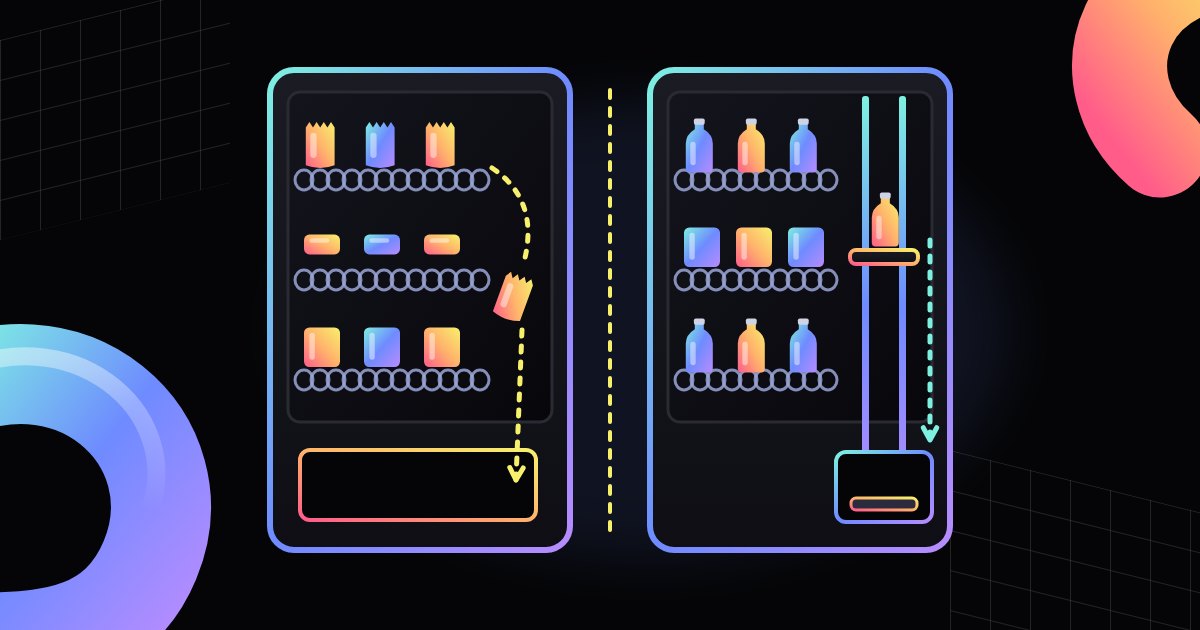
A spiral is a wire coiled like a spring and laid horizontally on a shelf. Products sit between its coils, one behind another. Once the customer makes a selection and pays, the controller starts the motor assigned to that spiral, and the spiral makes one full turn. The front product moves past the edge of the shelf and drops into the delivery bin at the bottom of the machine. The products behind it move one place forward.
Spirals vary in diameter and pitch, meaning the spacing between coils. The operator matches them to the size of the packaging, and in many models the shelves can be set at different heights. Many machines also have a sensor in the delivery area that checks whether a product actually dropped. If it doesn't detect one, the machine may try again, offer another selection, or not charge the customer, depending on its settings.
Strengths and limits of the spiral
The spiral's biggest advantage is simplicity. The mechanism has few parts, and each vend is quick. Its drawback is the free fall: the product drops from the shelf into the bin, and from the top shelves the drop is longer. A candy bar or a bag of chips usually doesn't mind, but more delicate products and packaging may not handle it as well.
How vending machine elevator delivery works
The elevator is a moving platform or basket that travels up and down along guide rails, usually at the front of the cabinet, behind the glass. In some designs, the platform also moves sideways to line up exactly with the selected column. After a selection, the platform rises to the level of the right shelf. The shelf mechanism, often the same kind of spiral or a belt, then pushes the product onto the platform. The elevator carries it down and presents it at the pickup door, where the customer takes it out.
So the elevator doesn't replace the shelf mechanism. It removes the free fall. The product moves on its own only for a short distance, from the edge of the shelf onto the platform, and rides the rest of the way down. You may also see the term "gentle delivery system," but manufacturers don't always use it to mean the same thing. That's why it's worth checking the documentation to see exactly how the mechanism works in a given model.
Strengths and limits of the elevator
An elevator makes it possible to sell products that a drop from a height could damage. The price is more complex mechanics: an extra drive, guide rails, position sensors, and electronics that must place the platform precisely. Each vend also takes longer, because the platform has to travel to the shelf and back. For a single customer, that's usually a short wait, but it's worth keeping in mind where traffic is heavy.
Which products suit each approach
The choice of mechanism depends mainly on the product range the machine will carry.
Products that handle a spiral well
Spirals work well for products in sturdy, lightweight packaging, such as candy bars, cookies, bags of chips, nuts, and chewing gum. Many spiral machines also sell drinks in plastic bottles and cans. Whether a given model is suitable for drinks, and for which kinds of packaging, is up to the manufacturer to specify.
Products where an elevator helps
An elevator is usually chosen when the range includes delicate products or products that shouldn't be shaken:
- drinks in glass bottles,
- yogurts, desserts, and other products in cups sealed with foil lids,
- sandwiches, salads, and meals in plastic containers,
- products in fragile or easily crushed packaging.
With products like these, a drop from a top shelf can damage the packaging or its contents. An elevator lowers that risk, but it doesn't remove the need to match each product to its shelf and to load the machine carefully.
Jams: where they can happen
In a spiral machine, the most common problem is a product that stops at the edge of the shelf and doesn't drop. Typical causes are the wrong spiral pitch, a product loaded crooked, soft packaging, or a bent spiral. For more on the causes and how to prevent them, read the article on why products get stuck on the spiral.
An elevator eliminates some of these situations, since the product doesn't have to drop into a bin, but not all of them. The shelf mechanism still has to push the product onto the platform, so a poor fit with the spiral or belt can still cause trouble. There are also new points where something can go wrong: a product can tip over on the platform, or the platform can fail to reach the right height, for example because of dirty guide rails or a dirty sensor. Many elevator machines report an error in such cases, and how they respond depends on the model and its settings.
Noise and vend time
The two mechanisms sound different. In a spiral machine, you hear the motor run briefly, then the sound of the product landing in the bin. In an elevator machine, there's no thud at the bottom of the bin, but you hear the platform drive for longer. Which machine is quieter in practice depends on the specific model, its condition, and where it stands. If noise matters, for example in a quiet area of an office, check whether the manufacturer lists a noise level on the spec sheet, or ask to see the machine in operation.
Vend time differs too. A spiral delivers the product almost immediately after the selection, while an elevator needs a moment to travel to the shelf and back. For occasional purchases, the difference is hardly noticeable, but it can matter in places where a line forms at the machine during a short break.
What it means for servicing
A spiral mechanism is relatively simple to maintain. Typical tasks include replacing or straightening spirals, replacing a worn motor, cleaning the shelves and the delivery bin, and checking the vend sensor. Much of this work gets done during restocking or a routine service visit.
An elevator needs more attention. Besides the shelf components, the guide rails, the platform drive, the position sensors, and the pickup door all need care. After parts are replaced or the shelf layout changes, the positions the platform travels to may need to be set again. The manufacturer's manual specifies the scope and frequency of maintenance, and the technician should know the specific model. Before choosing a machine, it's worth asking who will service it, how easy it is to get spare parts, and whether the service team has experience with this type of mechanism.
Capacity and interior layout
An elevator needs room in the cabinet. The platform and its guide rails take up space that a machine without an elevator can use in other ways. How this affects the number of selections and items depends on the design, so compare specific models using their spec sheets rather than general assumptions. While comparing, also check whether the shelves can be adjusted and whether one machine can combine spirals with different pitches.
Spiral or elevator: what to check before choosing
Before you decide which mechanism to choose, answer a few questions:
- Which products will go into the machine now, and which might be added later?
- Will the range include glass bottles, cups, or other delicate packaging?
- How busy is the location, and do lines form at the machine?
- Will the machine stand somewhere noise matters?
- Who will service the machine, and do they know this type of mechanism?
- What exactly does the spec sheet say about the delivery method, product dimensions, and maintenance?
If the range consists mainly of snacks in sturdy packaging, a spiral is usually enough. If selling delicate products matters, an elevator is worth considering. For an overview of machine categories, see the article on types of vending machines, and for real-world examples, take a look at these snack vending machines (publisher's site).
Summary
A spiral and an elevator solve the same task in two ways. The spiral is simple, quick, and well suited to typical snacks. The elevator adds a transport step so the product doesn't fall from a height. That widens the possible range to include delicate products, but it means more complex mechanics and more service work. Neither one is better across the board: the choice depends on what the machine will sell, where it stands, and who will look after it.