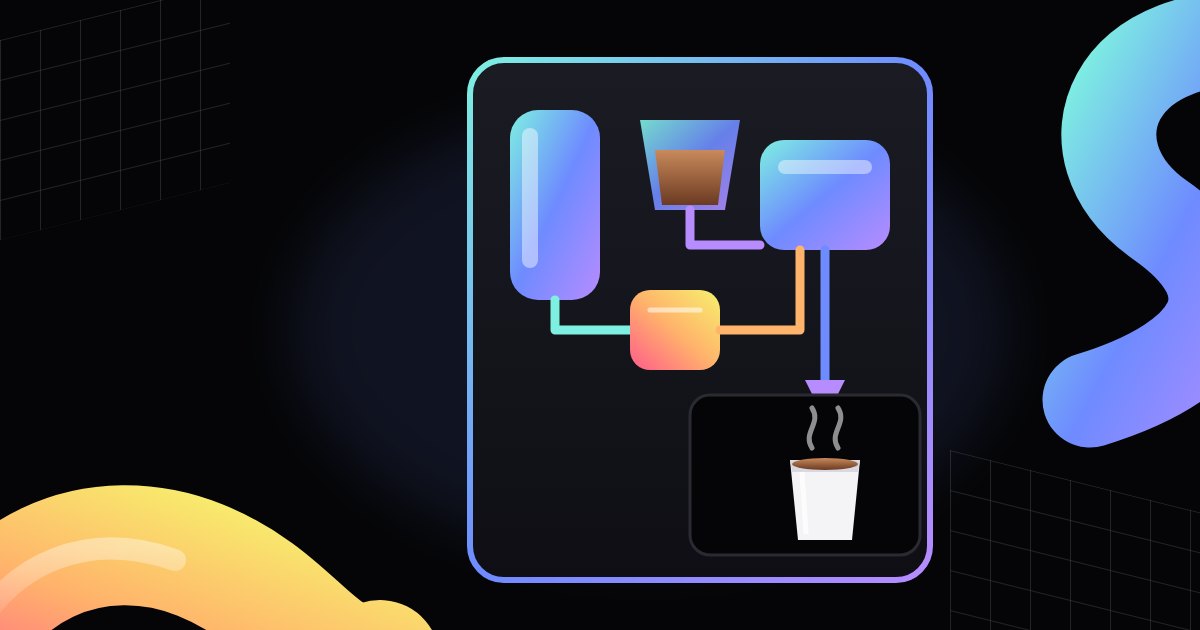
The seconds between choosing and drinking involve several components. Here is what happens inside.
- Choosing a drink and the controller
- Payment comes first
- The cup drops into place
- Water and the boiler
- Grinding the beans
- Brewing the coffee
- Instant coffee and powdered drinks
- Milk and foam
- Sugar and extras
- Pouring into the cup
- The ready signal
- What happens between drinks
- How long a drink takes
- When something goes wrong
- How to report a fault
- Cleaning matters at every stage
- Why it tastes different from your home machine
- FAQ
You press "cappuccino," hear a whir, a clunk, and a hiss, and a moment later you pick up your cup. Most people never wonder what happened inside. As long as everything works, there is no need to. But when the coffee is lukewarm, the cup does not drop, or the foam disappears after a few seconds, knowing how the machine works helps a lot. This post walks through a drink's journey from the button to the cup, step by step. We describe typical designs, not one specific model. You will find the details for your machine in the manufacturer's manual.
Choosing a drink and the controller
Everything starts with a button or a touchscreen. Your choice goes to the controller, the machine's electronic brain. The controller stores a recipe for every drink: how much coffee to grind, how much water to add, at what temperature, how much milk, and in what order. First, it checks that everything is ready. Is there water? Is the boiler at the right temperature? Are there cups in the dispenser? Is the grounds bin full? If something is missing, it shows a message instead of starting the drink. Our post on the vending machine controller explains how this part works.
Payment comes first
In paid machines, the controller also waits for a signal from the payment system. That might be a coin mechanism, a card reader, an app, or a prepaid key. The machine starts working only once payment is confirmed. In free machines, such as in many offices, this step is skipped or replaced by an employee badge. It helps to know that payment and preparation are two separate stages. If the payment went through but no drink came out, the cause usually lies in one of the later stages. That is when the message on the screen becomes useful.
The cup drops into place
If the machine dispenses its own cups, the first mechanical move is the cup drop. The dispenser rotates or slides, separates one cup from the stack, and lowers it onto the platform. That is often the clear clunk you hear. Some machines have a sensor that checks whether a cup is actually in place. If someone uses their own mug, the machine may have a button or sensor that skips this step. When cups stick together or a stack is loaded crooked, the dispenser may drop two cups at once or none at all. Our post on the cup dispenser covers how it works and why it jams.
Water and the boiler
Hot water is the base of almost every drink. In a plumbed-in machine, water usually passes through a filter and then into the boiler. In machines that use bottled water, a pump draws it from the tank. The boiler keeps the water at the temperature set by the manufacturer. The controller makes sure no drink starts until the water is hot enough. That is why the first drink in the morning may take a moment. Scale in the boiler makes heat transfer worse. The result is lukewarm coffee, even though nobody touched the settings.
Grinding the beans
In bean-to-cup machines, the next step is grinding. The grinder takes a measured portion of beans from the hopper and grinds it to a set fineness. That is the loud sound you hear at the start. Grind size affects taste. Coffee ground too fine makes a bitter, over-extracted drink and slows the water down. Coffee ground too coarse makes a watery cup. The grinder setting is usually adjusted by a technician or the operator, because it takes knowledge of the specific machine. Grinders wear out, too. Dull burrs grind unevenly, and you can taste that in the cup.
Brewing the coffee
The ground coffee drops into the brewer. There it is tamped, meaning pressed into a portion of a set density. Then hot water flows through the coffee under pressure. Brewing is what draws out the flavor and aroma. Time, pressure, and temperature are all set in the recipe. After brewing, the mechanism ejects the spent coffee into the grounds bin. In some machines, you hear a distinct click as it does. The brewer needs regular cleaning, because coffee oils build up on its screens. If cleaning is neglected, the coffee loses flavor and the mechanism may start to stick.
Instant coffee and powdered drinks
Not every machine has a grinder. Many make coffee from an instant product, or drinks from powder such as hot chocolate, tea, or soup. In these machines, a dispenser measures a portion of powder from a canister and drops it into a mixing bowl. There, the powder meets hot water. A whipper, a small spinning impeller, blends the two so there are no lumps. The finished drink flows through a nozzle into the cup. Many machines combine both methods. They make coffee from beans and hot chocolate and milk from powder. That is why there may be several canisters and several mixing bowls inside.
Milk and foam
Milk drinks need a separate stage. In machines that use powdered milk, the milk is made in a mixing bowl, much like hot chocolate. The whipper spins faster to create foam. In fresh milk machines, a pump draws milk from a chilled container, and a frother mixes it with air and steam or heats it. The order matters. In a cappuccino, the milk or foam usually comes first and the coffee second, while a latte uses different proportions. The recipe in the controller sets all of this. The milk system needs thorough cleaning, because milk residue spoils quickly.
Sugar and extras
If the drink is meant to be sweet, the sugar dispenser adds a measured amount. Many machines let you choose the amount with plus and minus buttons. Sugar may go into the mixing bowl with the other ingredients or straight into the cup. At the end, some machines dispense a stirrer. This part is a surprisingly common source of small problems. Moisture clumps the sugar into lumps that block the dispenser. Stirrers can jam in their chute. Both are easy to spot: the drink is bitter even though you chose sugar, or the stirrer is missing.
Pouring into the cup
The drink flows into the cup through one nozzle or several. In bean-to-cup machines, coffee and milk may come out of separate outlets. The controller tracks the volume so the cup does not overflow. Some machines have a level sensor or a safeguard that stops the pour if no cup is in place. After pouring, the machine often rinses the nozzles and mixing bowls with water for a moment. That is why you sometimes hear an extra whoosh when your cup is already sitting there. This quick rinse removes residue and keeps flavors from mixing between drinks.
The ready signal
Finally, the machine lets you know the drink is ready. Usually that is a message on the screen, a beep, or a light in the pickup area. A door may unlock, if the machine has one. It is worth waiting for that signal. Pulling the cup out mid-pour leaves a puddle in the drip tray and sometimes burned fingers. Some machines also count how many drinks they have served and store that in the controller's memory. The operator uses this data to plan restocking and service. It also shows which drinks are popular and which almost nobody chooses.
What happens between drinks
The machine does not rest when nobody is using it. The boiler keeps the water hot. The milk fridge, if there is one, keeps it cold. The controller may run automatic rinse cycles at set times. Many machines have an energy-saving mode that lowers the water temperature at night and raises it again in the morning. That is why the first coffee of the day sometimes takes longer. The energy-saving settings are usually changed by the service team. If people arrive at work earlier than the machine wakes up, report it so the hours can be adjusted.
How long a drink takes
Preparation time depends on the drink and the machine. Hot water or powdered tea comes quickly, because it only needs dosing and pouring. An espresso from beans takes longer, because grinding and brewing come first. A cappuccino with fresh milk can take the longest, since the machine makes two components in turn. We do not give specific times, because they vary between models and settings. In an office, though, it matters for the morning line. If several people order milk drinks at once, the line grows faster. Keep that in mind when choosing a machine and where it goes. Sometimes a second, simpler machine for hot water and tea shortens the line more than a faster coffee machine would. Tea drinkers no longer have to wait behind the latte orders.
When something goes wrong
Knowing the stages helps you describe a problem. Lukewarm coffee usually points to the boiler, scale, or energy-saving mode. Watery coffee may mean the grind or the brewer. Lumps in hot chocolate suggest moisture in the canister or a dirty mixing bowl. No cup points to the dispenser. No milk in a cappuccino points to the milk system or an empty container. You do not have to fix anything yourself. But when you tell the operator what happened, at which stage, and what the message said, the technician can bring the right part or suggest a fix remotely.
How to report a fault
A good report saves everyone time. Note a few things:
- which drink was selected,
- what message appeared on the screen,
- at which stage something went wrong: cup, grinding, pouring,
- whether the problem affects one drink or all of them,
- whether payment was taken,
- when the problem started.
A photo of the screen showing the message is often more helpful than a long description. Many problems can be diagnosed remotely on that basis alone.
Cleaning matters at every stage
Each of these stages leaves traces behind. The grinder collects coffee dust, the brewer collects oils, the mixing bowls collect powder residue, the milk system collects milk, and the boiler collects scale. That is why a coffee machine needs regular care even when it is running perfectly. It handles some tasks itself, such as rinsing the nozzles after each drink. Others need a human hand: emptying the grounds bin, washing the mixing bowls, descaling. The manufacturer lists the schedule for this work in the manual. If an operator services your machine, ask which tasks are part of their visits and which stay with the office.
Why it tastes different from your home machine
People sometimes compare vending machine coffee to what they make at home. The differences come from a few things. The machine follows a fixed recipe set for many people, not for one. It has to serve drinks quickly, one after another, so brewing time is shorter than when you take your time at home. It uses coffee and milk chosen to work in the machine. Recipes can be adjusted, though. If the team thinks the coffee is too weak or too bitter, the operator can change the settings or suggest a different coffee. It is worth asking instead of grumbling in the kitchen.
FAQ
Why does the first coffee in the morning take longer? The machine is often coming out of energy-saving mode, and the boiler has to heat the water. The service team usually sets the hours for this mode.
Does a bean-to-cup machine always make better coffee than an instant one? Not always. Taste also depends on the coffee, the settings, the water, and cleaning. Beans do give more room to fine-tune the flavor.
What is the whooshing sound after a drink is served? Usually it is the nozzles and mixing bowls being rinsed with water. That is a normal part of how many machines work.
Can I change a drink's recipe myself? Usually not. Settings are changed by the operator or a technician, following the manufacturer's manual.