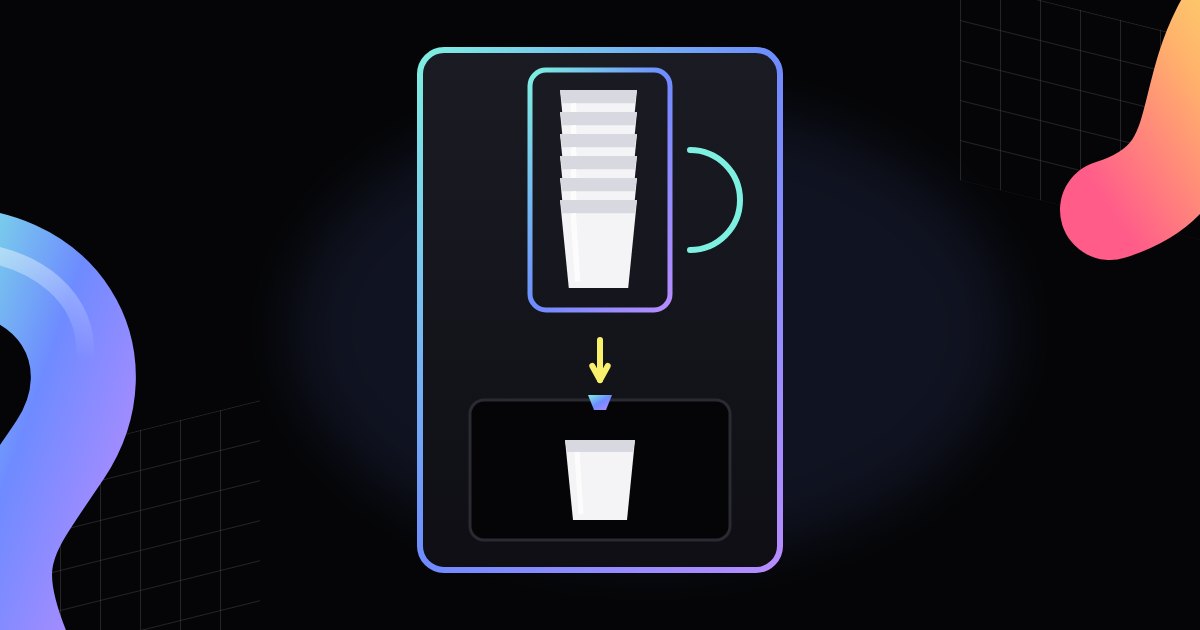
The cup has to be under the spout before the drink flows. That is the cup dispenser's job.
- How the dispenser is built
- How a cup gets under the spout
- A sensor confirms the cup is there
- When a column runs out
- Cups have to fit
- Crushed and stuck-together cups
- A badly loaded column
- Dirt in the mechanism
- Two cups at once
- Paper cups and plastic cups
- Noise as a clue
- Using your own mug
- When the cups run out
- What you can check yourself
- What not to do
- How to report the problem
- What to ask when choosing a machine
- Lids and to-go cups
- FAQ
You pick a coffee, pay, and wait. The machine hums, the coffee pours, but not into a cup. It goes straight into the drip tray. No cup dropped. Or two dropped at once, one inside the other, and the drink spills over the side. The cup dispenser is an easy part to overlook, but when it fails, it ruins the whole drink. This post explains how the dispenser works, why it jams, and what you can do before you call for service. We describe typical designs. The details for your machine are in the manufacturer's manual.
How the dispenser is built
A cup dispenser is a set of columns holding stacks of cups. The columns usually form a carousel in the upper part of the machine, above the spot where the drink is served. In each column, cups sit one inside the other, bottom down. Under the column is a separating mechanism. Its job is to catch the lowest cup, separate it from the rest of the stack, and let it drop. The cup slides down a guide onto the platform under the spout. The number of columns and how many cups they hold depend on the model. You will find those figures in the documentation. Designs vary, but the principle stays the same: one cup per order.
How a cup gets under the spout
The separating mechanism usually works with a screw-like auger or rotating cams. It slips between the rim of the lowest cup and the rim of the cup above it. It holds up the rest of the stack and lets the lowest cup go. This happens in a split second, with a distinctive click. The cup falls through a funnel or guide and lands on the platform. If the mechanism released too early or too late, the cup could tilt, fall sideways, or drag the next one with it. That is why precision matters so much here. A few millimeters of difference in a cup's rim can change everything.
A sensor confirms the cup is there
A mechanism separates one cup and drops it under the spout, and a sensor confirms it is there. That is an important safeguard. Without it, the machine would pour the drink even when a cup got stuck in the dispenser. The sensor is usually optical or mechanical, depending on the machine. If it does not detect a cup, the controller may try again or stop and show a message. Not every machine has such a sensor, and how it behaves depends on the settings. If a drink sometimes pours with no cup, it is a sign that the sensor or its settings need a look.
When a column runs out
When a column empties, the dispenser rotates to the next; when all are empty, the machine reports no cups. A sensor in the column or a counter in the controller signals that the stack is gone. The carousel then moves the next full column over the separating mechanism. Customers usually do not notice, apart from a slightly longer whir. Trouble starts when the rotation sticks or the sensor gets the column's status wrong. The machine may then report no cups while other columns are full. Or it may keep trying to dispense from an empty column.
Cups have to fit
The most common cause of jams is simple: cups that do not fit the dispenser. The separating mechanism is matched to a specific diameter, rim height, and cup shape. A cup a few millimeters wider wedges in the column. A narrower one slips through the mechanism together with the next. A different material or wall thickness changes how cups nest inside each other. That is why the manufacturer lists approved cups in the manual. Cups on sale at a wholesaler can look identical and still cause trouble. Can any cups be used? No. The dispenser works properly only with cups of specific dimensions.
Crushed and stuck-together cups
The second common cause is the condition of the cups themselves. Cups crushed in transit have a bent rim. The mechanism cannot grip them evenly. Stuck-together cups, pressed too tightly into each other, refuse to separate. This happens when a package sat under a heavy box or in a damp storeroom. Moisture makes paper cups swell and cling to each other. Heat can soften plastic cups. Keep your spare cups in a dry place, in their original packaging, away from radiators. Before loading, look at the stack and set aside any cups that look damaged.
A badly loaded column
Load cups as the manual says, in a size the manufacturer approves. A badly loaded column is a classic problem after a rushed restock. A stack pushed in at an angle leans on the wall and does not settle evenly on the mechanism. A stack made of two parts that did not fully nest has a gap in the middle. The mechanism then grabs several cups at once or none at all. Sometimes someone loads cups upside down, or tops up old cups with new ones and leaves a gap. Good practice is to slide the stack in slowly, straight, and all the way. Only then rotate the carousel to the next column.
Dirt in the mechanism
The dispenser works close to where steam forms and drinks splash. Over time, dust, sugar and powder residue, and sometimes sticky drops build up on the mechanism. Dirt adds friction and changes how cups slide. A cup that should drop stops halfway. A dirty sensor may not see a cup, or may see one that is not there. Cleaning the dispenser is part of regular machine care. How often and how to do it is in the manual. A dry or slightly damp cloth is often enough, but a lot depends on the design.
Two cups at once
When the machine dispenses two cups nested together, the drink may not fit or may overflow. It means the mechanism failed to separate them. The cause can be cups pressed too tightly, cups that are too narrow, a rim that does not match, or a worn mechanism. If it happens once in a while, single stuck cups are often to blame. If it happens regularly, check the whole batch and compare it with the manufacturer's requirements. Double cups also cost money. The supply runs out faster than sales suggest, and the operator does not know why. The number of orders and the number of cups used should roughly match.
Paper cups and plastic cups
Cups differ not only in size but also in material. Paper cups are stiffer in one direction and more sensitive to moisture. Plastic cups can be slippery and lighter, so they slide down the guide differently. A mechanism set up for one type may struggle with the other, even at the same diameter. That makes a change of material a good moment to talk to the operator. Sometimes an adjustment is enough, sometimes a different part is needed. We do not say here which cups fit which machines, because it depends on the model. The list of approved cups should be in the machine's documentation.
Noise as a clue
The dispenser has its own sound. A short click when a cup drops and a whir when the carousel turns are normal. If you hear grinding, several clicks in a row, or a long whir with no result, the mechanism is probably fighting a stuck cup. It helps to note when the sound happens. With every drink, or only after switching to a new column? An observation like that helps the technician narrow down the cause. You do not need to know the names of the parts. A description like "it grinds every time it switches columns" is enough.
Using your own mug
Many machines let you skip the cup. A sensor then detects the customer's mug. That is handy in an office, where people keep their own mugs on their desks. Fewer disposable cups also means less trash and less frequent dispenser restocking. Your mug has to fit under the spout and stand steadily on the platform, though. Very tall travel mugs may not fit. Check whether a model supports this in the coffee vending machine (publisher's site) descriptions or with the operator. It is also worth asking whether the machine changes the drink size in that mode.
When the cups run out
What happens when cups run out? The machine usually blocks cup drinks or allows your own mug. The behavior depends on the settings. The screen usually shows a no-cups message. In an office, that is the cue for the person in charge to call the operator or restock, if they are allowed to. An empty dispenser on Monday morning is a small disaster in the kitchen. So it helps to know how many cups the dispenser holds and roughly how many the team uses in a week. Those two numbers let you plan restocking before the dispenser runs dry.
What you can check yourself
If you have access to the dispenser and the manual allows it, you can check a few things. Is there a crushed cup at the bottom of a stack? Is the stack standing straight? Are these the same cups that are usually loaded? Is a cup or a piece of one stuck in the guide? Is there visible dirt around the sensor? Before doing anything inside the machine, follow the manufacturer's manual and safety rules. Do not put your hands into moving mechanisms. Anything that needs adjustment, disassembly, or a part replaced is a job for the technician.
What not to do
A few instincts make things worse. Do not force a stack down to fit more cups. Squeezed cups stick together even more. Do not pry out a stuck cup with a knife or a screwdriver, because it is easy to damage the mechanism or the sensor. Do not mix cups from different batches in one column if they look different. Do not tape over the sensor to trick the machine. Do not load cups that were picked up off the floor or lay around loose. A quick workaround usually buys a moment of peace and then a bigger fault.
How to report the problem
A good report saves the technician time. Include:
- what happens: no cup, two cups, a crooked cup, a drink with no cup,
- whether it affects all columns or one,
- what message appears on the screen,
- whether the batch or supplier of cups changed recently,
- how long it has been happening and how often,
- a photo of the column and the cup packaging.
The note about changed cups is often the key. Many dispenser "faults" end as soon as the machine goes back to cups that fit the mechanism.
What to ask when choosing a machine
If you are choosing a coffee machine, ask about the dispenser. Does the machine dispense cups at all, or does it need your own? How many columns does it have, and how many cups do they hold? Which cups are approved, and who supplies them? Can cup dispensing be switched off for people with their own mugs? Who restocks cups, and how often? Who cleans the dispenser? The answers are in the documentation and with the operator. It helps when the person who services the machine also supplies the cups. That avoids a situation where someone buys cheaper cups and then wonders about the jams.
Lids and to-go cups
In some places, people take their coffee with them, for example onto a production floor or to their car. That raises the question of lids. Most dispensers do not dispense lids. They usually sit in a separate holder next to the machine. The lid has to fit the cup, or it pops off at the first step. If many people at your site take coffee to go, tell the operator. They can suggest cups with matching lids or another solution. Hot coffee spilled on your hand on the way to your desk is not something anyone wants to experience twice.
Related reading: The Vending Machine Controller.
FAQ
Can any cups be used? No. The dispenser works properly only with cups of specific dimensions.
What happens when cups run out? The machine usually blocks cup drinks or allows your own mug.
Why does the machine drop two cups at once? Usually the cups are stuck together, pressed too tightly, or do not fit the mechanism. If it happens often, report it to the operator.
Can I remove a stuck cup myself? Only if the manual allows it and you do not need tools. Otherwise, report the fault to the technician.