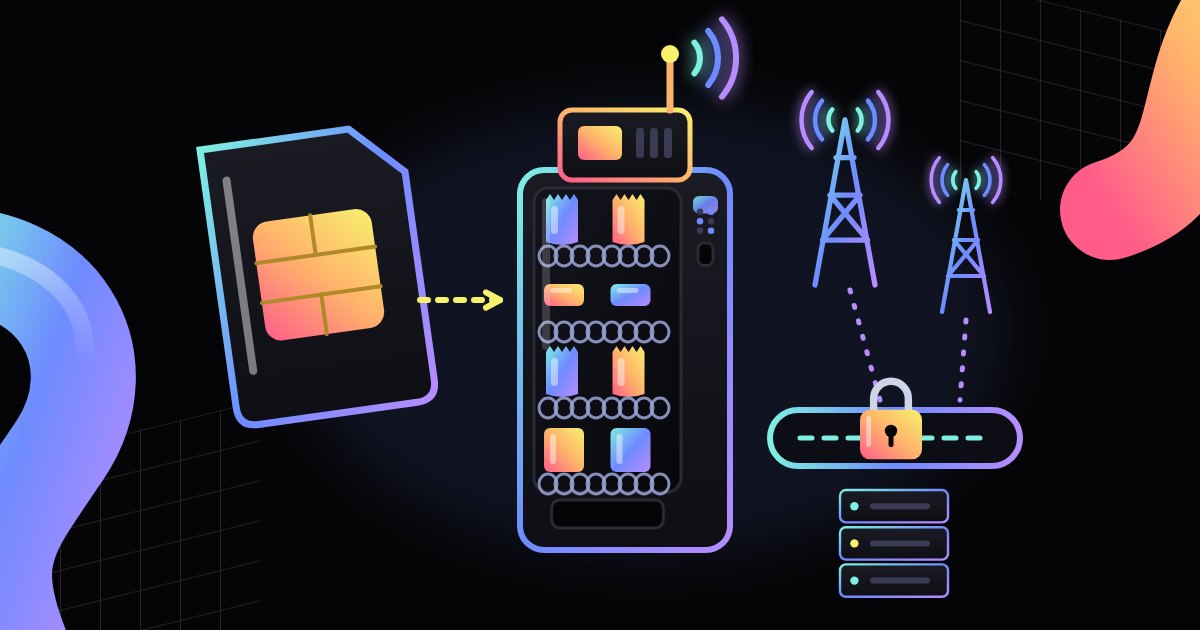
How an M2M SIM card differs from a regular one, how a vending machine's modem sends data, what multi-network cards and private APNs are, and what to check.
A vending machine with a card reader and a telemetry module usually connects to the network through a cellular modem. Inside that modem is a SIM card, but not the same kind you have in your phone. Devices typically use M2M SIM cards, also called IoT SIM cards. In this article, we explain how they differ from regular SIM cards, how the modem sends data, what roaming and multi-network cards mean, how the connection is protected, and what to ask before you choose a setup. For a general comparison of cellular, Wi-Fi, and cable connections, see our article on vending machine connectivity.
How an M2M SIM card differs from a regular SIM card
M2M stands for machine to machine. An M2M SIM card serves a device rather than a person: a vending machine, a meter, a payment terminal, or a tracker. Technically, it works much like the card in your phone, because it identifies the device on a mobile operator's network and lets it send data. The differences are mostly about how the cards are used and managed:
- the card usually handles data only, while voice calls and text messages are turned off or limited, depending on the plan,
- cards are managed as a group in the provider's dashboard, so you can activate them, suspend them, or check data usage without physical access to the machine,
- some cards come in industrial versions designed for tougher conditions, such as temperature swings, humidity, or vibration, and the card manufacturer lists the exact ratings,
- besides cards that slide into a slot in the familiar mini, micro, and nano sizes, there are also chips soldered permanently onto the modem board.
You will also find eSIM cards, which let an operator profile be loaded remotely. This means switching connectivity providers does not always require a technician visit with a new card. Whether a given modem and card support this depends on the hardware and the provider's plan.
How the modem in a vending machine sends data
The SIM card does not send anything by itself. The modem does that. It is a communication module built into the card reader, the telemetry module, or the machine's controller. When the power comes on, the modem registers on the cellular network, and the card confirms that the device is allowed to use it. The modem then opens a data connection and exchanges information with the system provider's server.
A vending machine usually sends small amounts of data: sales, stock levels, temperature, door openings, and errors, plus an authorization request when someone pays by card. Some data goes out right away, while other data is collected and sent in batches from time to time. What a particular machine sends and how often depends on the system and the operator's settings. To learn more about what this data is used for, read our article on vending telemetry.
Cellular network technologies
Device modems use different network generations: older 2G and 3G networks, LTE, and versions of LTE designed for devices, such as LTE-M and NB-IoT. In many countries, operators are gradually shutting down older networks. That is why, when choosing equipment, it is worth asking which technologies the modem uses and what will happen to the machine when an older network stops working at its location.
Coverage, roaming, and multi-network cards
An M2M SIM card connects to the network of one or several mobile operators. A regular domestic card usually uses the network of the operator that issued it. If that network has weak coverage where the machine stands, the modem may struggle to connect, even when a phone on another network works fine.
That is why many providers offer multi-network cards, also called roaming SIM cards. Such a card can use the networks of several operators and switch to another one when the selected network is unavailable. This is especially useful where coverage varies from network to network, for example in basements, large halls, or rural areas. Exactly how the card picks a network, whether it switches on its own, and the terms of use are set by the card provider.
A multi-network card cannot create coverage where no network reaches, though. In that case, an external antenna or a different way of connecting the machine may help. It is best to check coverage at the exact spot where the machine will stand before it is installed there for good.
Security: private APNs and data restrictions
An APN (access point name) is the gateway a device with a SIM card uses to connect to a data network. A regular card usually uses a public APN and reaches the internet through it. M2M setups often use a private APN instead. Traffic from the machines then goes to a separate network run by the connectivity or system provider rather than to the open internet, and the device itself is usually not directly reachable from the internet.
A private APN is only one piece of the picture. Card and system providers also use other restrictions, for example:
- a list of allowed addresses the device can connect to,
- locking the card to a specific modem, so it will not work in another device if someone removes it,
- a SIM PIN code,
- data caps and alerts when a card uses an unusual amount of data,
- encryption of the connection between the machine and the server.
Which of these safeguards are available and turned on depends on the card provider and the telemetry system. We cover how to look after networked machines in more detail in our article on cybersecurity for connected vending machines.
Managing SIM cards day to day
With a single vending machine, the SIM card is a minor detail. With many machines, it becomes a task of its own. That is why M2M card providers usually offer a dashboard where operators can see all their cards: which ones are active, how much data they use, and when they last connected to the network.
A dashboard like this helps in a few common situations. When a machine stops sending data, you can check whether the card is active and whether the modem is connecting to the network at all. When a machine goes into storage for a while, you can suspend its card. When a card suddenly uses much more data than usual, it is worth checking what is happening with the device. The details depend on the provider, but it helps to know who in your company has access to the dashboard and who responds to these alerts.
It is also worth settling who owns the card. Sometimes the machine operator supplies it, and sometimes the telemetry or card reader provider includes it as part of their service. This determines who pays for data, who replaces the card, and who to contact about connection problems.
What to check before you choose
Before you choose a setup, ask how the modern vending machines (publisher's site) you are considering connect to the network and which SIM cards they support. Then check with the provider:
- whether the modem uses a slide-in card, a soldered chip, or an eSIM,
- which network technologies the modem uses and what happens when an older network is shut down,
- whether the card uses one network or several and how it switches between them,
- what the coverage is like at the exact spot where the machine will stand,
- whether the connection runs through a private APN and which other safeguards are turned on,
- who supplies the card, who pays for data, and who has access to the management dashboard,
- what happens to payments and data when the machine briefly loses its connection.
Summary
An M2M SIM card is a card made for devices rather than people. In a vending machine, it works with a modem that sends data about sales, the machine's status, and payments. The card and the way it is managed determine which networks the machine can use, how the connection is protected, and how quickly the operator notices a connection problem. Before choosing a setup, it is worth checking coverage on site and agreeing on who is responsible for the card, data, and connection problems.
FAQ
Can I use a regular phone SIM card in a vending machine? Technically, it is sometimes possible, but manufacturers and system providers usually plan for M2M cards. Check the device documentation or ask the provider whether a given modem will accept a different card.
What is the difference between an M2M SIM card and an IoT SIM card? They are usually two names for the same kind of card. IoT, or the Internet of Things, is a broader term that covers all devices connected to a network.
Does a multi-network card always have coverage? No. It can use several networks, but where none of them reaches, it will not connect either.
What is a private APN? It is a separate gateway to a data network. Traffic from the devices goes through it into the provider's closed network instead of the open internet.
Who pays for the SIM card in a vending machine? Usually the machine operator or the telemetry system provider, depending on what they have agreed.