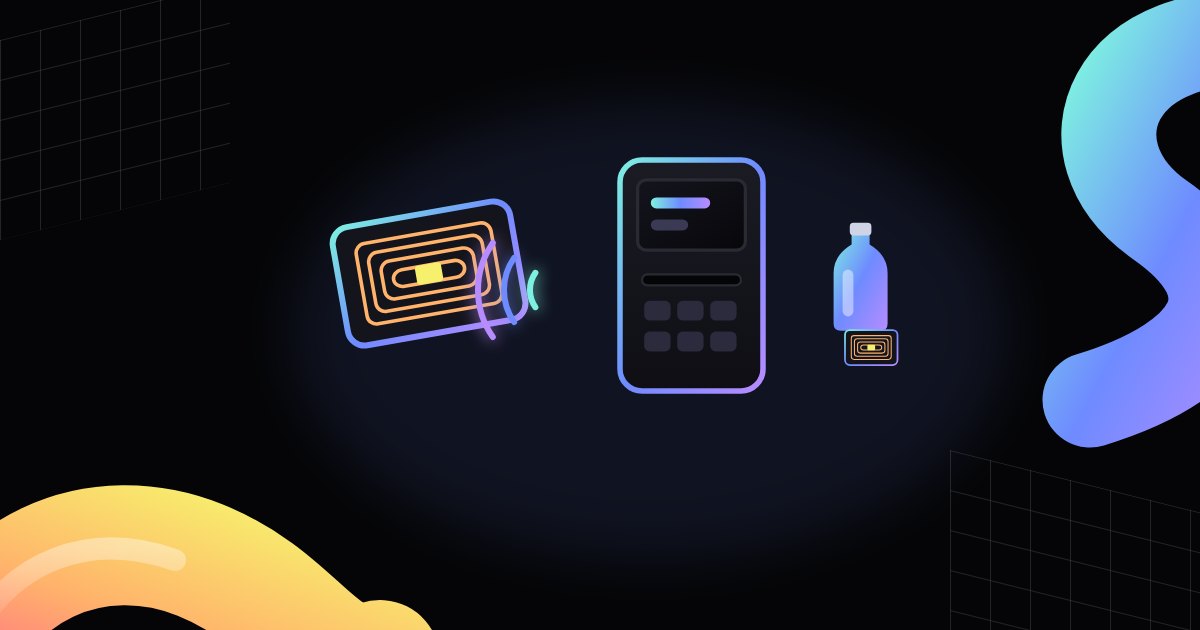
RFID is radio-frequency identification. In vending, it helps identify products and users.
- What RFID is
- How reading works
- What a system consists of
- Uses
- Coolers that recognize products
- Preparing stock
- Staff cards
- Identifying technicians
- Limits
- Metal and liquids
- Types of tags
- Low temperatures and moisture
- RFID and NFC
- Reading range
- Data on the tag
- Stocktaking
- Tracking use-by dates
- Information for customers
- Costs
- Comparison with other methods
- Rollout step by step
- Training the team
- Stock discrepancies
- Service and maintenance
- Tags and the environment
- Integration with telemetry
- When RFID pays off
- Questions for the supplier
- Summary
- FAQ
The acronym RFID comes up more and more often in vending: in coolers that recognize taken items on their own, in staff cards, and in machine security. For many people, though, it is still a mysterious term. This guide explains in plain language what RFID is, how reading works, where the technology is used in vending, what its limits are, and what to consider before choosing an RFID-based solution.
What RFID is
RFID (Radio Frequency Identification) is a technology where a reader picks up data from a small tag by radio, with no contact and no line of sight needed. In vending, it is used in coolers that recognize taken items and in systems where staff pay or log in with a card. A tag can be a sticker, a card, a key fob, or a small element sewn or glued into packaging.
How reading works
The reader's antenna sends a signal, the tag replies with its ID, and the system matches it to a product or user in a database. Most tags used in retail have no battery of their own. They draw the energy to reply from the reader's signal. That makes tags cheap and small, and lets them work for a long time without maintenance.
What a system consists of
A typical RFID system has three parts: tags, a reader with an antenna, and software that processes the reads. The tag stores an ID. The reader picks it up and passes it on. The software knows which product or person is behind a given number and acts on it, for example by charging for an item or opening a door. All three parts have to fit together.
Uses
In vending, RFID shows up mainly in three areas:
- Recognizing products in vending coolers (publisher's site).
- Staff cards in plants and offices.
- Identifying a technician opening the machine.
Each of these uses the same principle, but each has different requirements and different benefits for the operator.
Coolers that recognize products
In an RFID cooler, every product carries a tag. The customer authorizes a payment, opens the door, takes items, and closes the cooler. The reader checks which tags are missing, and the system charges the customer only for the items taken. The advantage is freedom in arranging stock on the shelves. The downside is that every unit has to be tagged, at an extra cost.
Preparing stock
With RFID coolers, preparing stock takes an extra step: attaching a tag and linking it to the product in the system. Some operators do this in their warehouse; others order products already tagged from the supplier. The tag has to be firmly attached and survive transport. A damaged tag can mean a product the system does not see.
Staff cards
At companies, RFID is often used to identify employees. The same card or fob an employee uses to open doors can be used to pay at a vending machine or to use an employer subsidy. The system recognizes the card, checks the balance or entitlements, and settles the purchase. Before rollout, check whether the reader in the machine supports the cards the company uses.
Identifying technicians
RFID can also secure the machine itself. Instead of a traditional key, the technician uses a card or fob, and the system records who opened the machine and when. That makes access control easier, especially in large fleets with many staff. A lost card can be blocked in the system without changing locks.
Limits
Every item needs a tag, and some packaging, such as metal or liquid-filled, can make reading harder. Tag choice depends on the system. Reading is also affected by how products are arranged, the distance from the antenna, and the number of tags in one place. That is why it pays to test the system with your own product range before rollout.
Metal and liquids
Radio waves pass poorly through metal and water. Cans, metallized films, and bottled drinks can interfere with reading a tag, especially when packed tightly together. Manufacturers offer special tags for such packaging, and arranging products well helps reduce the problem. Tests with real stock will show what works in a given cooler.
Types of tags
RFID tags vary in size, shape, range, and durability. The simplest are thin stickers that are easy to put on packaging. There are also tags designed for metal packaging, versions that withstand moisture and low temperatures, and rigid fobs or cards for repeated use. The system supplier usually specifies which tags work with its readers.
Low temperatures and moisture
Coolers run at low temperatures, and condensation can form on packaging. A tag has to stay attached and keep working in those conditions. Check that the tags you choose are meant for cold environments, and watch whether they peel off after a few days. A poorly attached tag is a common cause of stock discrepancies.
RFID and NFC
Is RFID the same as NFC? NFC is a type of RFID that works over a very short range. NFC is used, among other things, for contactless phone payments. In vending, the two often overlap: a staff card may use one variant of RFID, while the payment terminal supports NFC. When choosing equipment, ask which standards the reader supports.
Reading range
Range depends on the type of tag and reader. Door and vending cards usually work at a distance of a few centimeters, which prevents accidental reads. Systems in coolers have to read tags throughout the whole compartment. Matching the range to the use case matters a lot for reliability.
Data on the tag
Does an RFID tag hold personal data? A product tag usually holds just an ID. User cards may be linked to data in the system. Information about the product, price, or user is stored in a database, not on the tag itself. Discuss how data is handled in card-based systems with the supplier and a data protection specialist.
Stocktaking
RFID also makes counting stock easier. A reader can read many tags at once in a short time, so checking the contents of a cooler or a crate of products takes less time than counting by hand. Some operators use this in the warehouse too, for example when handing stock to drivers.
Tracking use-by dates
If the system links a tag to a specific product batch, the operator can track use-by dates in every cooler. That makes it easier to plan stock swaps before products go out of date. It is especially useful for sandwiches, salads, and dairy, where dates are short and waste adds up quickly.
Information for customers
Customers do not need to understand the technology, but they should know how to buy. Put a short guide on RFID coolers: how to start a purchase, that only the items taken are charged, and why a hold may appear on their account. Clear information means fewer questions and complaints.
Costs
RFID costs include readers and antennas, software, and tags. In product-recognition coolers, tags are often the biggest item, because you need as many as the units you sell. Add the labor of attaching them. With staff cards, costs are usually lower, because cards last for years and the company often already has them.
Comparison with other methods
In coolers, RFID competes with shelf scales and cameras. Scales are simpler but need tidy shelves. Cameras need no tags but require products to be clearly visible. RFID gives freedom in arranging stock at the cost of tags. The right choice depends on your product range, scale, and how your team works.
Rollout step by step
A typical rollout looks like this:
- define what RFID should be used for,
- choose a supplier and tag type,
- test with your own product range or cards,
- prepare procedures for tagging stock,
- train the team,
- launch at the first location.
Testing with real stock is the most important step, because it reveals problems you cannot see in a catalog.
Training the team
The people preparing stock and restocking coolers need to know how to attach tags, how to check that they work, and what to do with damaged ones. Technicians should know the basics of how readers work. A short guide and a checklist for each visit cut down on errors and stock discrepancies.
Stock discrepancies
No system is perfect. Sometimes the stock in the system differs from what is actually on the shelves, for example because of a damaged tag or a product placed where it is hard to read. At every visit, compare actual stock with the system and record the differences. Recurring problems show what needs fixing.
Service and maintenance
Readers and antennas need little maintenance, but check them periodically, especially after moving a machine or changing the shelf layout. The manufacturer usually describes how to test them in the documentation. Software updates can improve read accuracy, so it is a good idea to install them.
Tags and the environment
RFID tags are an extra element of packaging. At scale, ask the supplier about tag types and how they are handled after use. Some operators limit RFID to selected products and sell the rest from other types of machines. That is another argument for matching the technology carefully to the product range.
Integration with telemetry
An RFID cooler knows what was taken, so it also knows what is left on the shelves. Connected to a telemetry system, it lets the operator see stock remotely and plan restocking without guessing. Sales data helps tailor the range to each location and reduce waste.
When RFID pays off
RFID works best where the benefits outweigh the cost of tags: with higher-value products, at locations with steady traffic, and where freedom in arranging stock matters. With staff cards, the benefits show quickly, because the cards already exist. A simple cost-and-savings calculation for your own fleet will help you decide.
Questions for the supplier
Before choosing a solution, ask which tags are supported and what they cost, how the system handles metal packaging and liquids, which cards the reader can read, how service works, and what data the system records. The answers make it easier to compare offers and avoid surprises.
Summary
RFID is a technology for reading tags by radio, with no contact and no line of sight needed. In vending, it is used to recognize products in coolers, handle staff cards, and control access to machines. It offers freedom and convenience, but it requires tags, testing with your own product range, and a well-trained team. Discuss personal data questions around cards with a specialist.
Related reading: Vending Machine Technical Documentation and What Is a Vending Planogram and How Is It Built.
FAQ
Is RFID the same as NFC? NFC is a type of RFID that works over a very short range.
Does an RFID tag hold personal data? A product tag usually holds just an ID. User cards may be linked to data in the system.
This article is general information only and is not legal advice. The rules for processing personal data in a given system are set by its controller.